


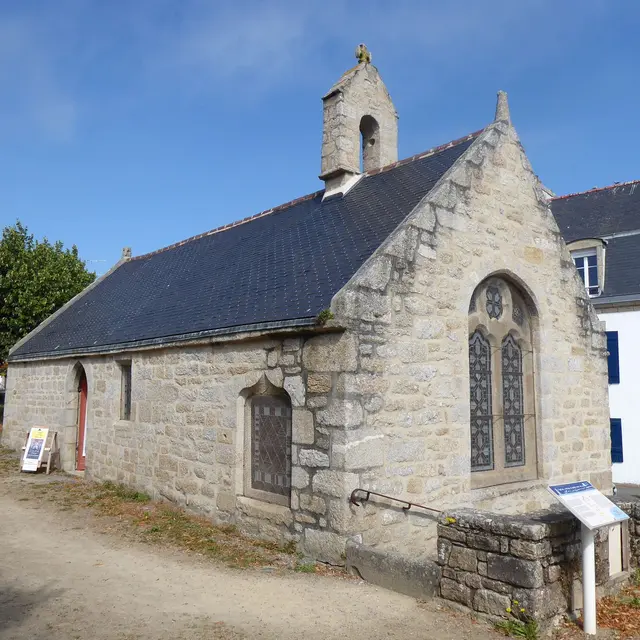
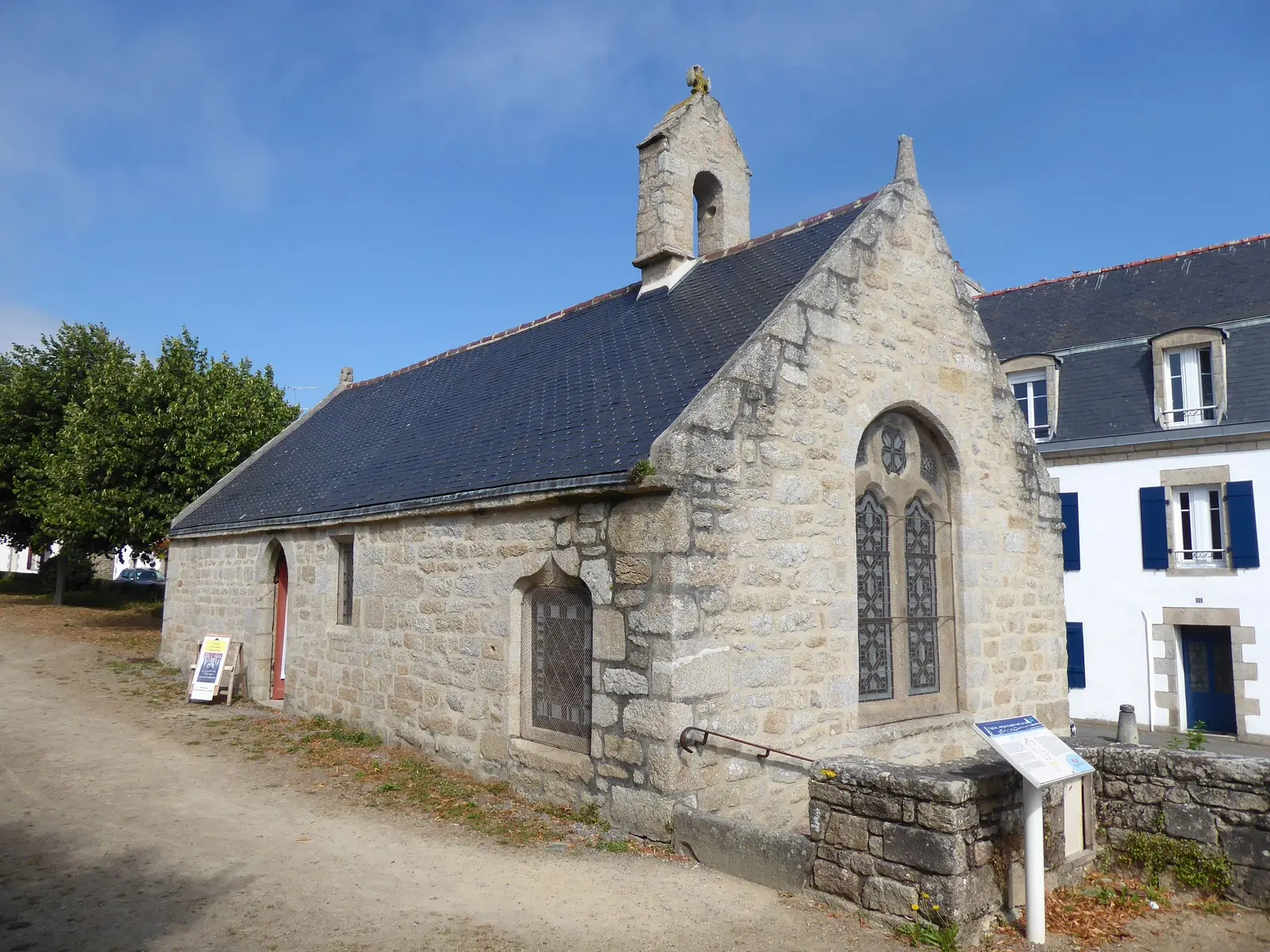
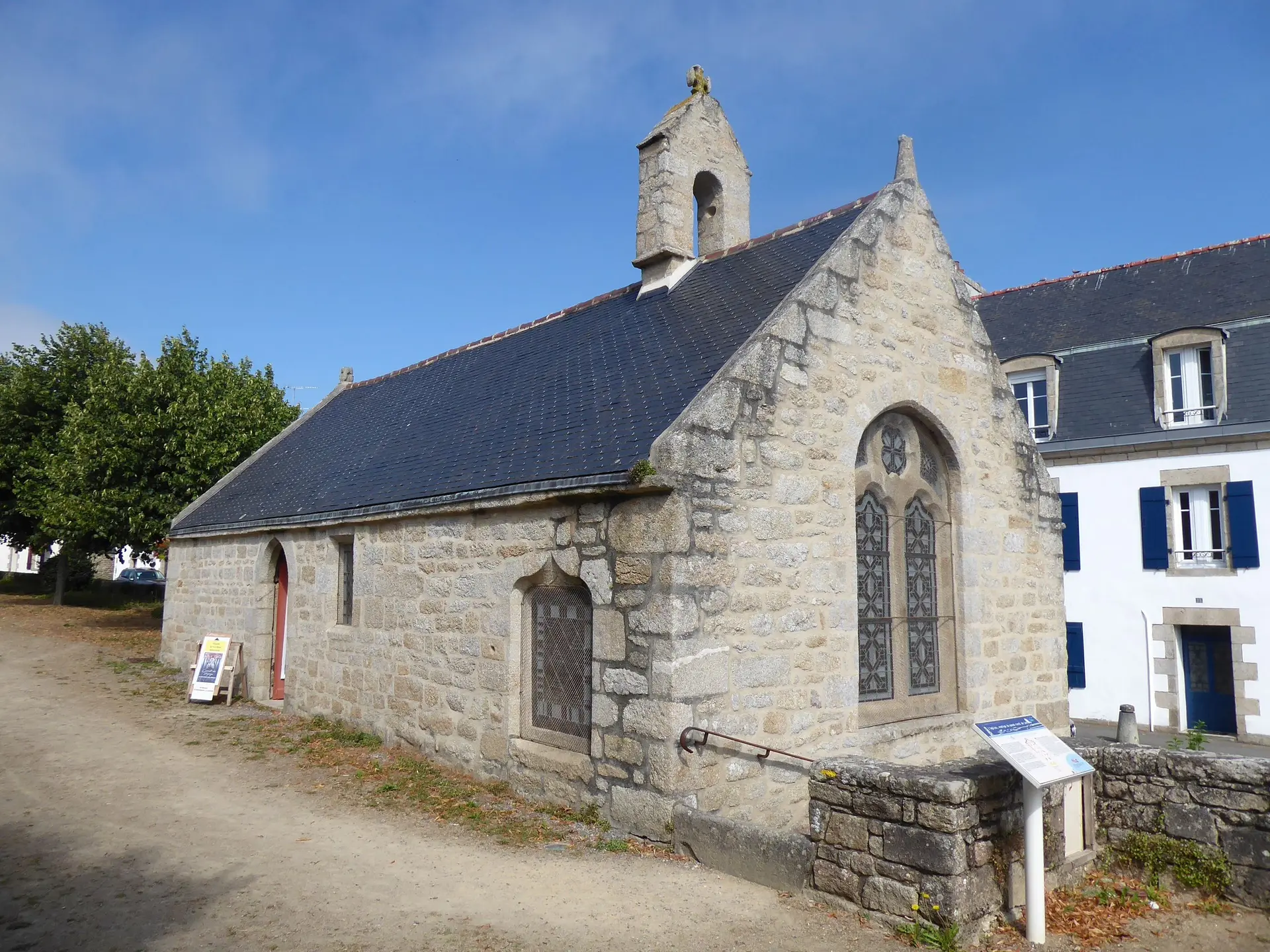
The Porz Bihan chapel is located near the Romanesque church in the parish enclosure. It was built in the 14th century.
Built to the north-east of the Romanesque church, the Porz Bihan chapel (Breton for "little port") takes its name from the fact that, before the port was reclaimed, it was located right on the edge of the mudflat where the boats ran aground. For a long time, it was used as a sacristy. It was in this chapel that the Bigouden region's list of grievances was drawn up during the French Revolution. On 12 February 1790, at the invitation of the rector Denis, the first assembly was held to elect the members of the parish commune, the beginning of the current system of communal administration.
Incredible but true! During his term of office from 1843 to 1852, Mayor Alphonse de Penfentenyo presented a proposal to demolish the building to allow the road to be widened. This plan was rejected by the prefect. His views were not shared by his grandson Jehan de Penfentenyo, who became mayor in 1935 and actively campaigned for the chapel to be preserved.
Now fully restored, the Porz Bihan chapel has become a venue for various exhibitions.
Built to the north-east of the Romanesque church, the Porz Bihan chapel (Breton for "little port") takes its name from the fact that, before the port was reclaimed, it was located right on the edge of the mudflat where the boats ran aground. For a long time, it was used as a sacristy. It was in this chapel that the Bigouden region's list of grievances was drawn up during the French Revolution. On 12 February 1790, at the invitation of the rector Denis, the first assembly was held to elect the members of the parish commune, the beginning of the current system of communal administration.
Incredible but true! During his term of office from 1843 to 1852, Mayor Alphonse de Penfentenyo presented a proposal to demolish the building to allow the road to be widened. This plan was rejected by the prefect. His views were not shared by his grandson Jehan de Penfentenyo, who became mayor in 1935 and actively campaigned for the chapel to be preserved.
Now fully restored, the Porz Bihan chapel has become a venue for various exhibitions.