


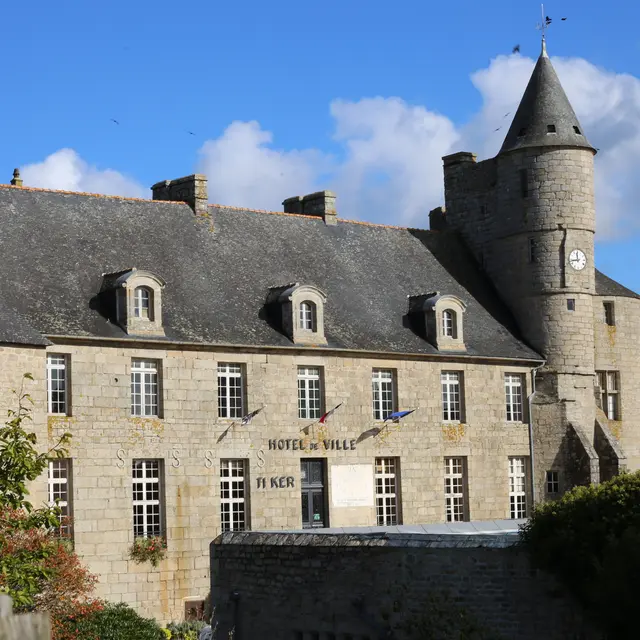
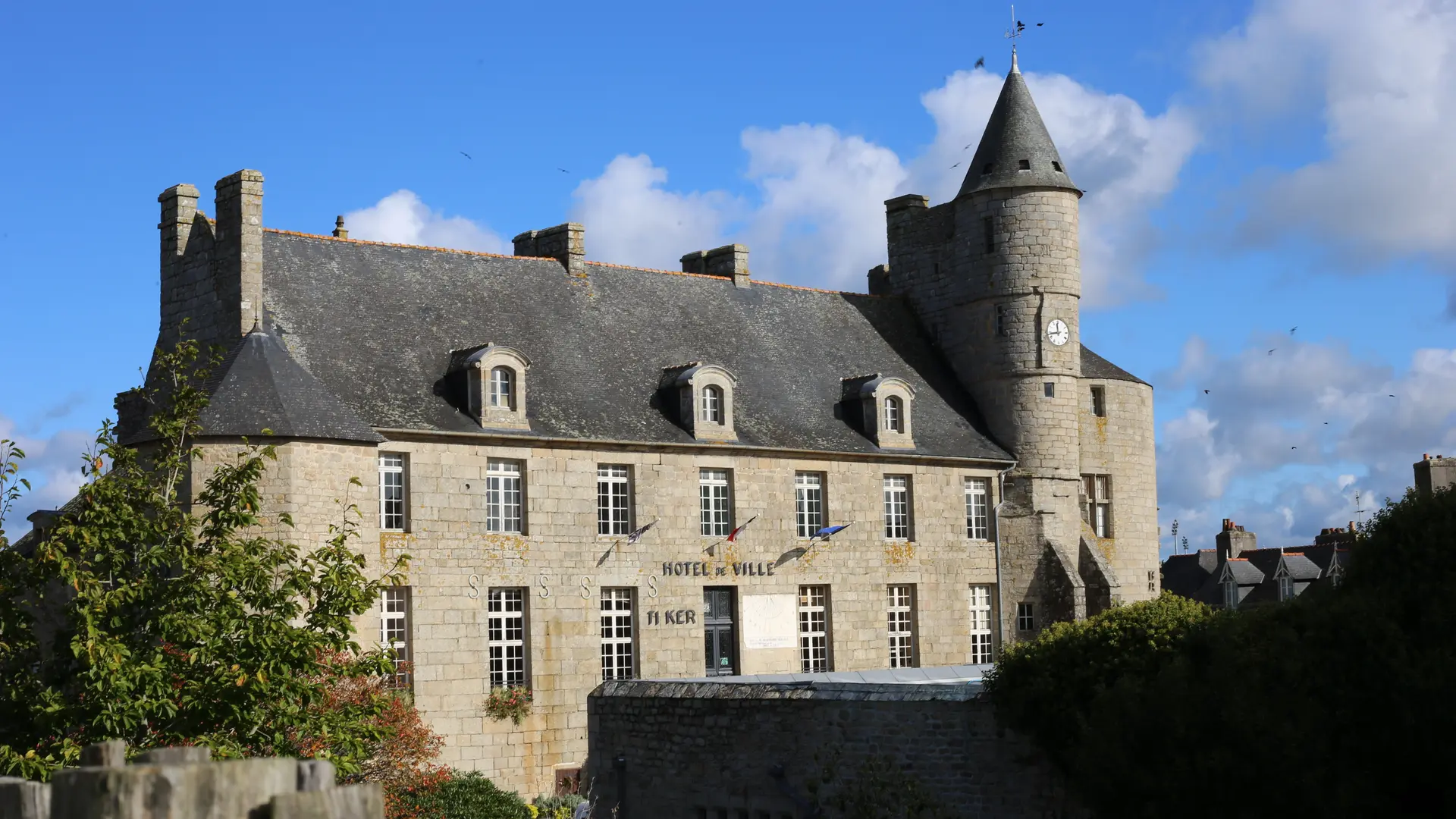
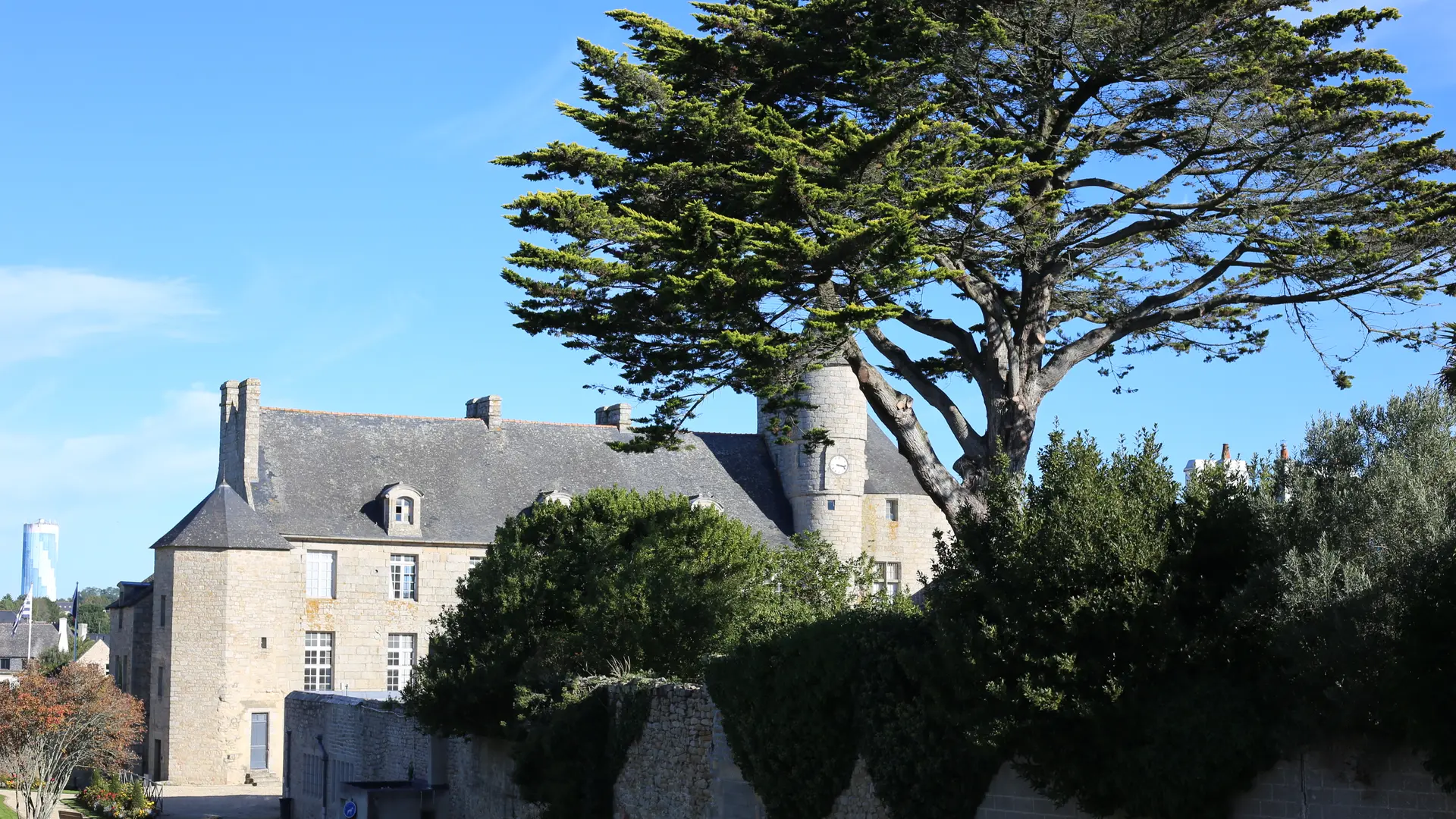
The castle was built as a fortress in the 13th and 14th centuries by the Barons du Pont, who had become powerful lords.
In 1675, during the "Bonnets rouges" revolt (or "papier timbré revolt"), peasants protesting against the new taxes devastated the castle and set it on fire. At the beginning of the 18th century, the main building, which today houses the Pont-l'Abbé Town Hall, was rebuilt over the old cellars. During the Revolution, it was also used as a prison. Since 1955, this castle, standing proudly at the foot of the river, has also housed the Musée Bigouden in its dungeon.
In 1675, during the "Bonnets rouges" revolt (or "papier timbré revolt"), peasants protesting against the new taxes devastated the castle and set it on fire. At the beginning of the 18th century, the main building, which today houses the Pont-l'Abbé Town Hall, was rebuilt over the old cellars. During the Revolution, it was also used as a prison. Since 1955, this castle, standing proudly at the foot of the river, has also housed the Musée Bigouden in its dungeon.
Services
Animals accepted
Rates
Child rate
—
Rate for large families
—
Location
Spoken languages
Spoken languages


Environment
Environment
- In the town centre
- By a lake or artificial lake