


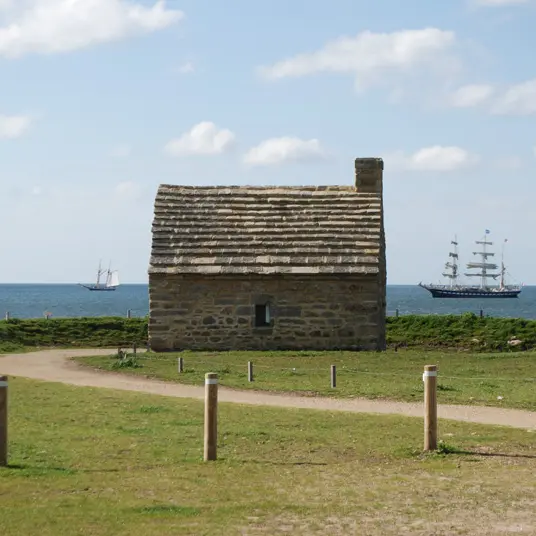
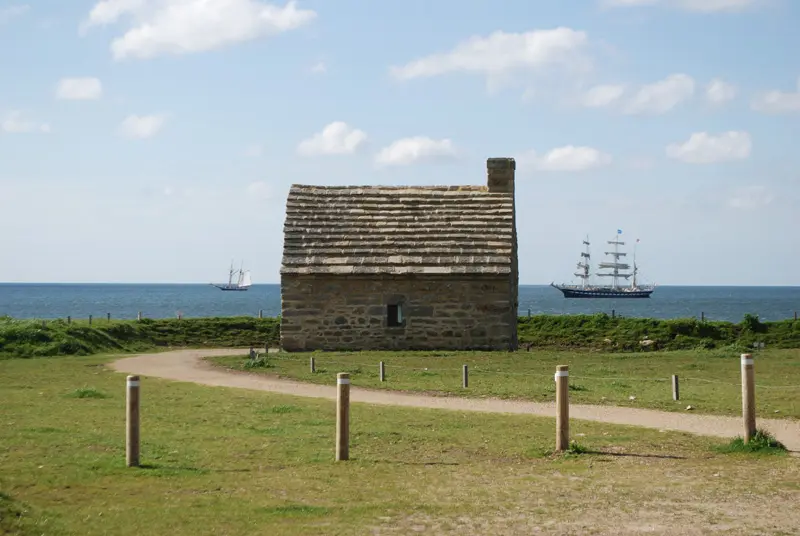
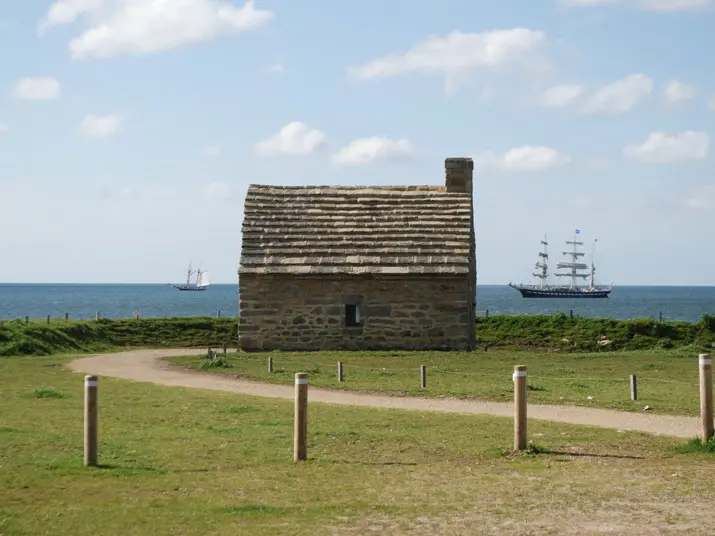
Built in the 18th century, the guardhouse is the only vestige of a larger coastal protection complex that included an ammunition storehouse and flagpoles. Louis XIV wanted to make the kingdom's maritime borders inviolable. Colbert therefore ordered the construction of coastal batteries and guard posts along the coast. Vauban was commissioned to erect these buildings at vulnerable points: beaches, estuaries and harbour entrances.
Combrit was equipped with a battery comprising two buildings, a gunpowder magazine and a furnace for heating cannonballs. This battery was equipped with three 8-guns, enabling crossfire with the batteries at Bénodet (two guns) and Ile-Tudy (three guns). Each gun was armed by a corporal in charge of the gun and 7 gunners from the parish where it was located.
Now restored, the Corps de garde, also known as Ti Napoléon, hosts small-scale exhibitions from June to September.
Combrit was equipped with a battery comprising two buildings, a gunpowder magazine and a furnace for heating cannonballs. This battery was equipped with three 8-guns, enabling crossfire with the batteries at Bénodet (two guns) and Ile-Tudy (three guns). Each gun was armed by a corporal in charge of the gun and 7 gunners from the parish where it was located.
Now restored, the Corps de garde, also known as Ti Napoléon, hosts small-scale exhibitions from June to September.

