©

Mathias Ouvrad exhibition - Pont-L'Abbé

|

C. Dameron

Headdresses and costumes

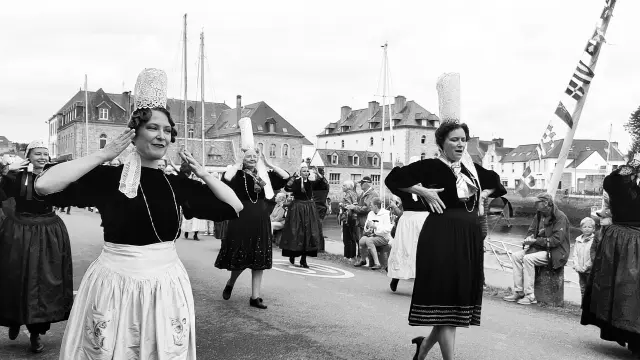
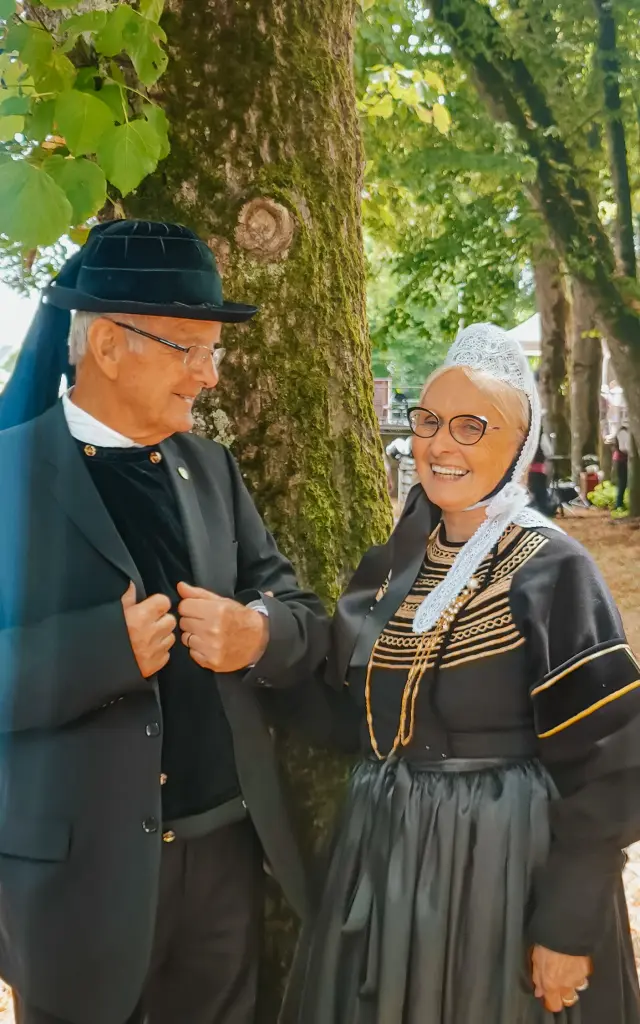
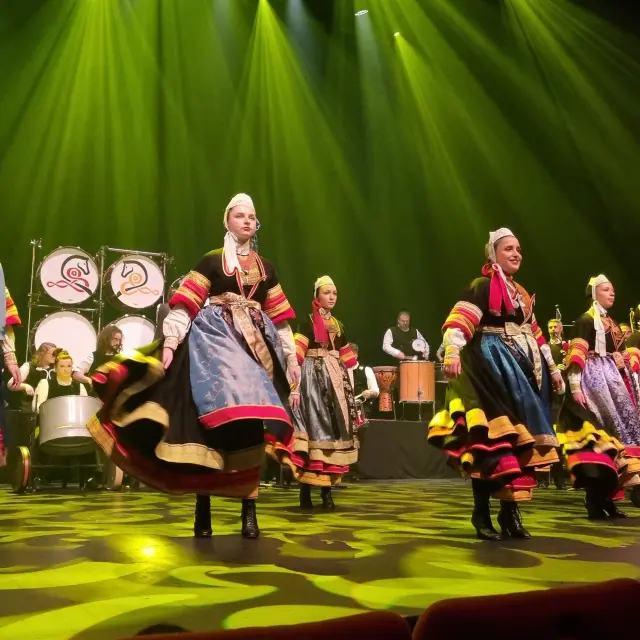
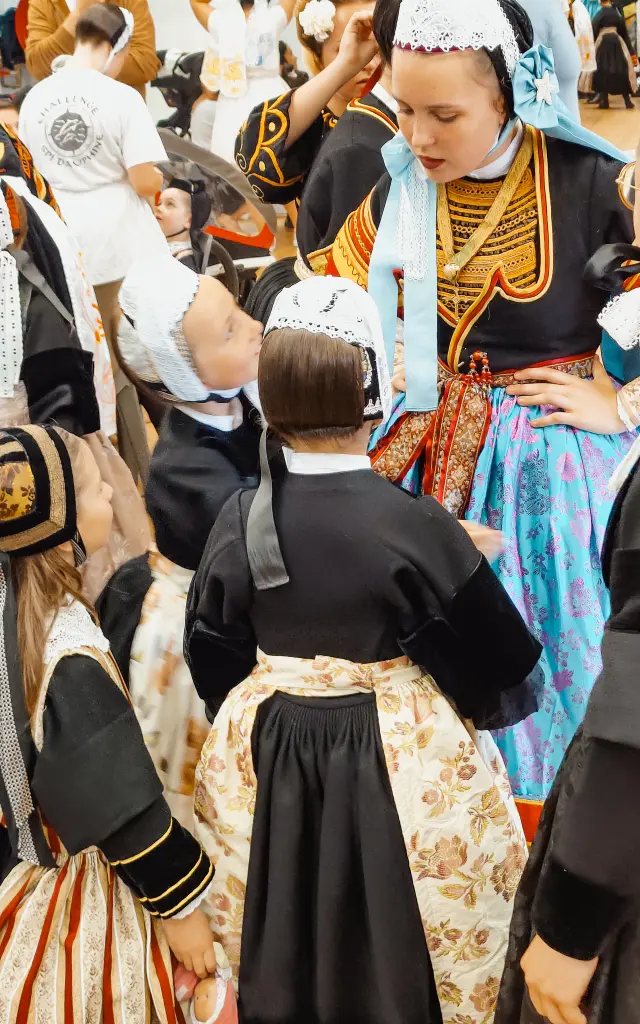
The Bigouden headdresses and costumes are part of our cultural heritage. They are exhibited in museums and celebrated, especially in the summer during festivals and traditional gatherings.

The story of the little hat that became a big hat...

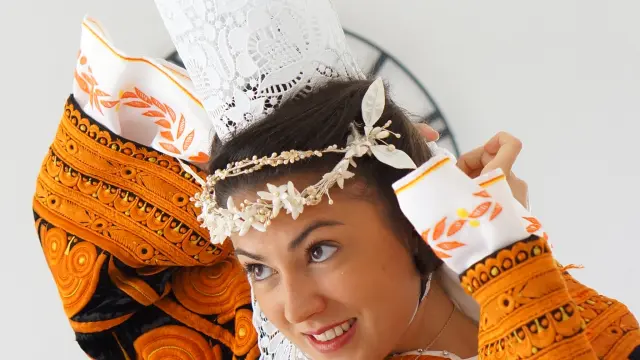
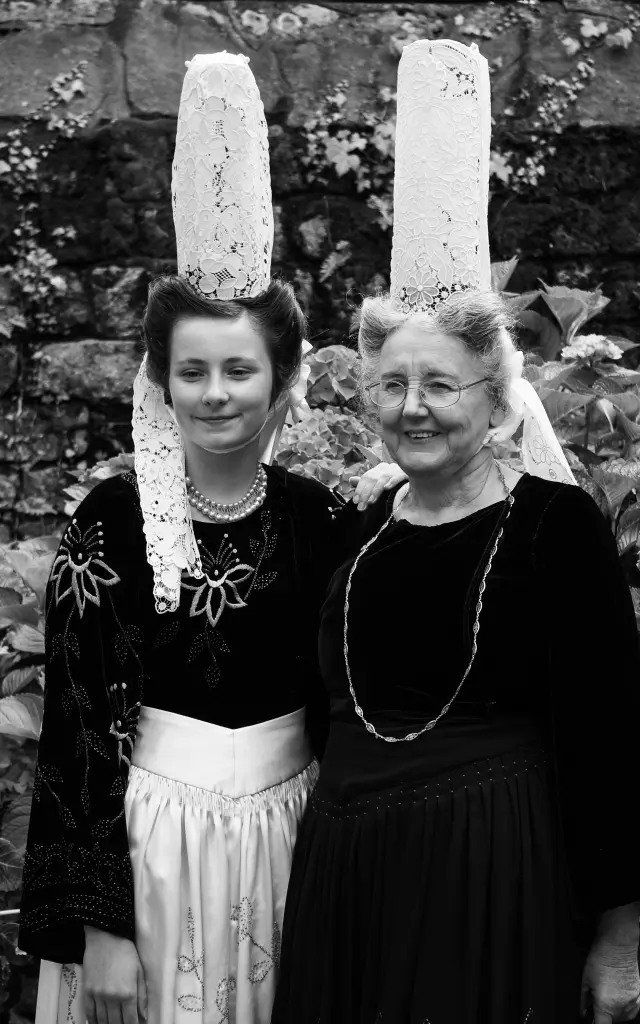
In Pays Bigouden, the traditional headdress was surprisingly small in the 19th century, particularly compared to everywhere else in Brittany.

Then, at the beginning of the 20th century, local women stopped placing it on the edge of the forehead, but fixed the headdress further back on a circular comb, which allowed the designs to soar – in all senses!

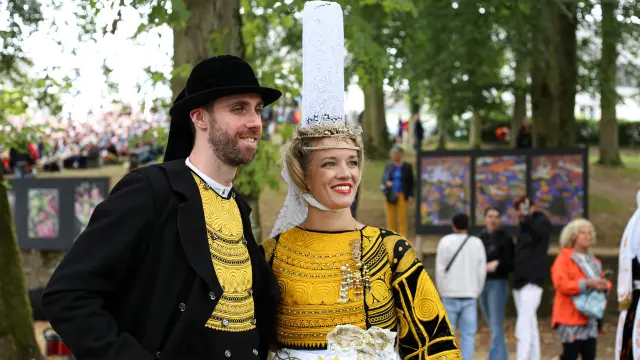
From headdresses of around 10 cm in the 1910s, to around 20 cm in the 1920s, the Bigouden headdress reached over 33-35 cm in the 1940s.
A culture bigoudène

The Bigouden region has said goodbye to wearing headdresses every day. The design grew so much due to the impetus of the inhabitants and a certain competition between the young girls, each wanting to stand out a little from the next.

Today, this tradition has been maintained, not forgotten!

The headdress is the story of the Bigoudène woman, who could adapt it over the years, in line with fashion. This headdress is a symbol, part of the local memory.

It has grown thanks to the young girls of the region, thanks to their daring, their pride and their character. The headdress has become a signature. Far beyond the Bigouden region, it is now, by association, the symbol of Brittany.

Where can I see headdresses?

  • Grand parade of the Festival des brodeuses, second weekend in July
  • Musée Bigouden, from summer 2026.
  • Mondays in summer, 6pm, Lesconil harbour, costume parade and dance initiation, free.
  • Entre terre et mer parade in Penmarc’h in August.
  • And also at other traditional events.
FAQ
©

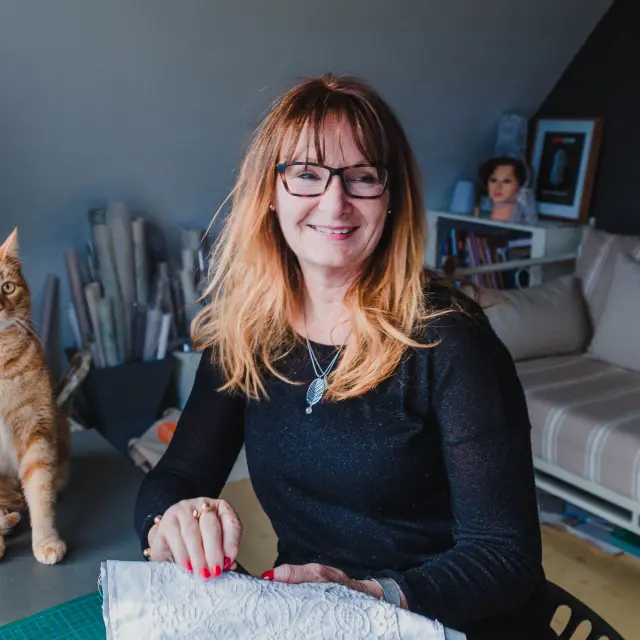
Nadine Chaminand Embroiderer at Ile Tudy

Embroidery has always been my passion. I embroider and create in my studio. I also offer workshops for those who want to learn this ancient technique.

These workshops take place twice a summer at l’Abri du marin in Sainte-Marine and places need to be booked in advance.

Nadine Chaminand

The Bigouden costume

 From everyday garment to costume

Bigouden clothing was worn to work, built to brave storms and to attend local festivals. Even if it’s no longer worn on a daily basis, the tradition is still alive and well. From museums and workshops to bagadoù music groups and festivals, the costume is exhibited, preserved, reworked and celebrated.

Take a tour of this region to get a better idea of the subtleties and richness of Bigouden embroidery.

 Embroiderers, a guild

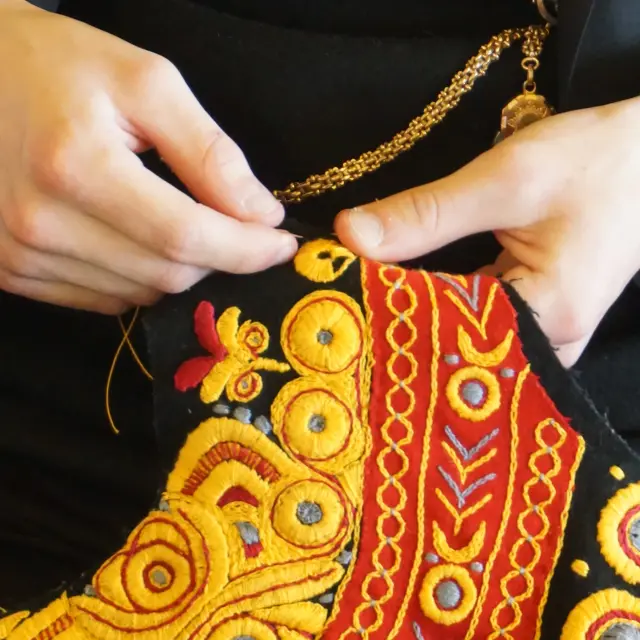
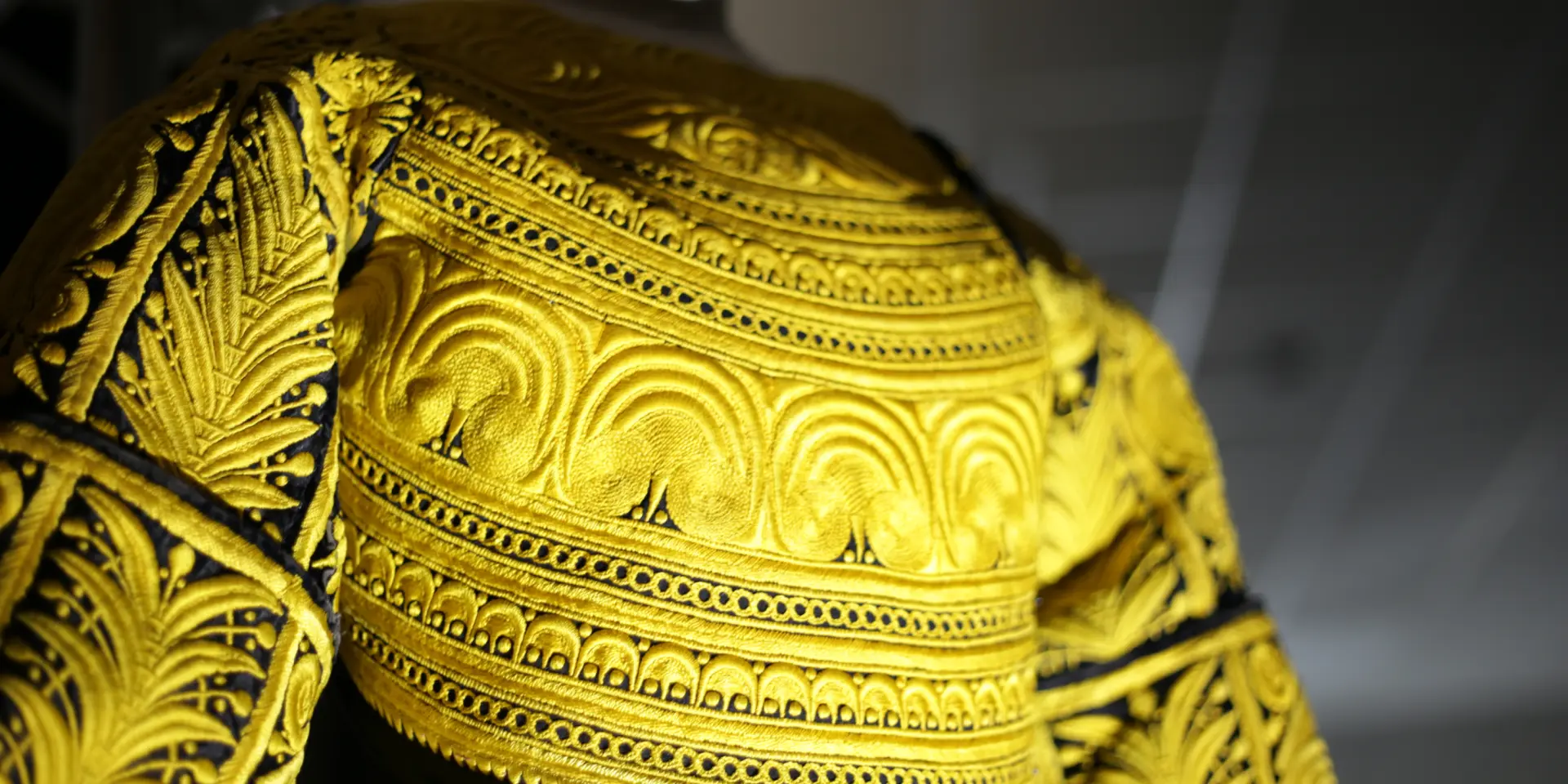
Before it became ornamental, embroidery was first and foremost functional on clothing. It was used to attach a silk or velvet ribbon or to cover a seam. Little by little, embroidery began to spread and was inspired by fashionable French motifs. Embroidery on peasant clothes remained highly codified.

The clothes were made from black or blue woollen cloth, lined with linen for the breastplates. They were embroidered by men, as very thick fabrics had to be pierced and a certain amount of strength was required to prick and push the needle.

The tennerien neud embroiderers (thread-pullers in Breton) were invited by families to stay for a communion or a wedding, while the waistcoat was being made. They usually worked alone on the floor, cross-legged, bent over their work on which they placed motifs according to the social rank, community and heritage of their client.

Bigouden embroiderers long formed a powerful guild. At the end of the 19th century, there were several in the Pont-l’Abbé region. They were aware of new trends in Parisian fashion, and it was through them that embroidery designs in a variety of styles appeared.